

Someone once said “Scratch the surface of an authoritarian leader and you will find a child who at some point in his tender years was humiliated.”
Having typed this quote, I think I made it up. But it is an easy matter to ask AI who might have said something like it. Turns out, Alice Miller (Polish-Swiss psychologist) wrote something very close. Says my AI source:
The idea very closely matches the central thesis of the Swiss psychoanalyst Alice Miller — especially her work on childhood trauma and its influence on later violent, authoritarian, or cruel behavior.
Miller argued that many dictators and authoritarian personalities learned cruelty, dominance, and the need to humiliate others because of painful or humiliating experiences in their own childhoods that can be replayed later in life on a larger scale (e.g., in political power).1
I imagine that at some point in his young life, the future autocrat was made to feel shame at some deep and terrible level. At some point he resolves: From now on until forever I will do or say anything so that I am never humiliated by anyone, nor ever again feel shame.
The imperative to do or say anything is anchored in fear. The school recess bullies some of whom become our future tyrants on the world stage have honed techniques to keep the world from seeing their fear. And they have practiced for so long that they have forgotten how afraid they really are. They lost the word for fear. They turn it on the rest of the world.
“I don’t recognize the country I live in.” I have heard versions of this more and more often. We know that children “act out” when there is something bothering them — there is some need that has not been met or some internal conflict between what they desire and what their world says they can get.
This post started in my head as an attempt to address this conundrum Our country is becoming “unrecognizable” because of the actions and words of politically very powerful men. They seem unhappy — getting mad at people who ask a certain kind of question, promising to get even with accusers, shutting down debate, calling “fake” any news — or individual words — that do not comport with their vision of themselves. Name calling. Threatening perceived enemies. And allies.
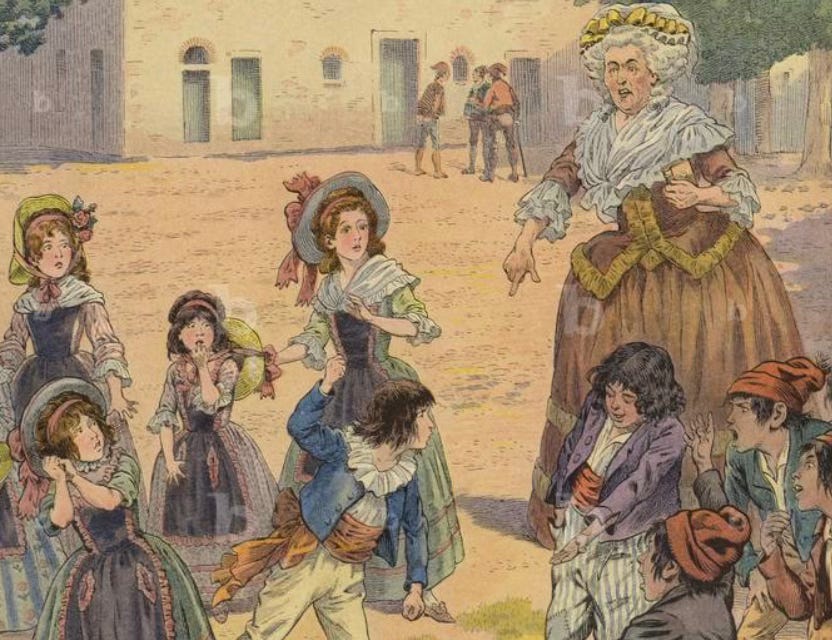
All the other crime-mob behavior we all have been watching.
Will it take history and perspective to answer the question: “What are they acting out?” Right now we are preoccupied with all the chaos they have created.
If this were a child’s behavior, a helpful parent would seek help and treatment.
If the cause of the problem is unconscious suppression of past trauma, Carl Jung has this idea:
The psychological rule says that when an inner situation is not made conscious, it happens outside, as fate. That is to say, when the individual…does not become conscious of his inner opposite, the world must by force of necessity act out the conflict and be torn into opposing halves.”2
A couple decades ago I attended a lecture/workshop by Harvard psychologist Donal C. Klein. I remember him saying that the emotional power of humiliation is analogous to a nuclear weapon. Klein was probably citing the work of Evelin Lindner3 a German-Norwegian scholar. In a summary4 of her book Making enemies: Humiliation and International Conflict, Brett Reeder of the Conflict Research Consortium writes:
She argues that humiliation instigates extremism and hampers moderate reactions and solutions. Humiliation, she says, has the tendency to destroy everything in its path, making it "the nuclear bomb of emotions."
“U.S. Executive Leadership: Hampering Moderate Reactions and Solutions since 2025.”

It starts with little men who are afraid of being wrong or being seen as wrong in any way. They cope with their buried fear by projecting it out into the world.
I just wish their little hands were not so close to actual nuclear weapons.
Enough! Next week I am going to talk about joy, dammit.
Aion: Researches into the Phenomenology of the Self (part of The Collected Works of C.G. Jung, Volume 9, Part II).
I've had thoughts like these about the current people in power and about any number of other tormenters I've come across in my lifetime. It is a reasonable explanation for how someone develops the inclination toward bullying behavior. Mental health must also be a consideration.
But, for those currently wreaking havoc, with nearly every advantage imaginable, I also ask what stopped them from changing that trajectory? Not everyone who is humiliated becomes a terrorist. Some get therapy. Some get dogs. Some take up weight lifting. Some make up their minds. Some decide it's just who they want to be. Dammit.