

“What is something you would attempt to do if you were guaranteed not to fail?” is one of those questions that made me pause and think — when I first encountered it in my studies of motivational science back in the day.
It took me in two directions. One direction is to try to answer the question by reflecting on times when fear of failure (and of all the implication about myself that would accompany said failure) had held me back. If success were guaranteed, and the fear of failure somehow evaporated like the alcohol from cooking wine, what venture would I take on — presumably with more confidence and a lighter step?
The other direction is a related question: To what extent does fear limit my capacity to act on things I want to do?
Turns out, to a great extent. I see this when I reflect on the substantial catalogue of items over the course of my life that I chose not to undertake specifically because there was — in my mind — a high probability of failure. Or unmitigable risk. Or too many unknowns. Or simply because “why take on something that you feel is beyond your ability to accomplish successfully?”
There are lots of things to do. I simply prefer those that play to my strengths, have some guarantee of closure or completion, sooner rather than later; that I can get off my desk with dispatch, and — this might be the most revealing characteristic — will minimally inconvenience other people.
So, it is with great interest that I am reading “The Map that Changed the World: William Smith and the Birth of Modern Geology” by Simon Winchester, sent to me recently by my west-coast brother-in-law.
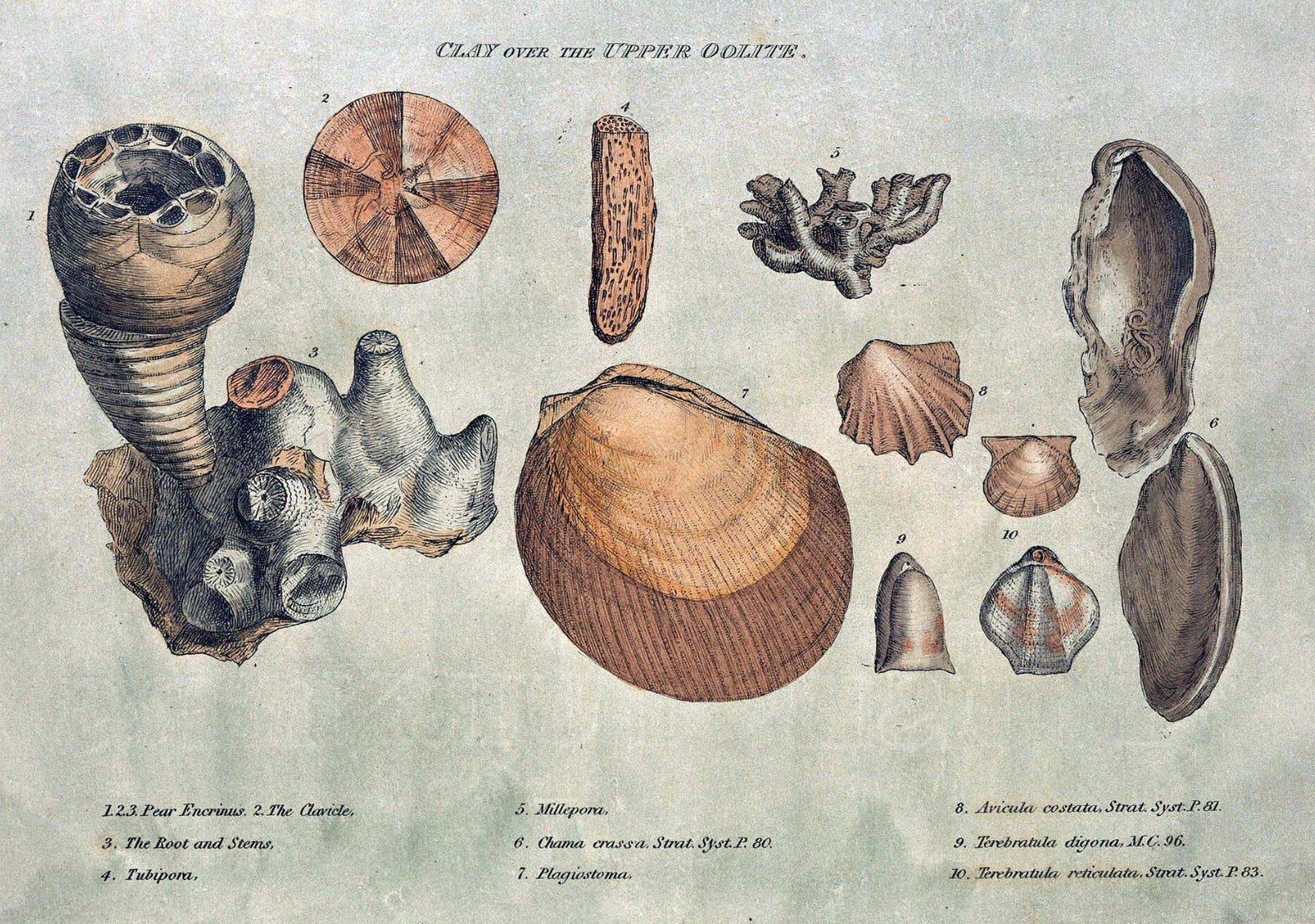
It is the story of a man of modest means who, at an early age, took an interest in the fossilized shells he found in the dirt and embedded in various outcrops of rock in and around his home in Somerset, England in the late 1700s. The shapes and patterns of what we now know as ancient marine life were similar to those of modern snails and crustaceans. The notion of evolution was yet to be formulated. The idea of deep time was absurd.
Popular at the time was the notion put forward by James Ussher, the Archbishop of Armagh in 1650, based on his reckoning from the Bible, that the earth was not yet 6,000 years old, having started on Saturday evening October 22, 4004 BC. Sunday was the official first day.
Against this and related kinds of thinking, William put together his theory of stratification. A surveyor and canal-digger, he was arguably the first to note the predictability of geologic strata — which layers appeared in which order — and the consistency of these patterns across the country. The relative age of any given strata could be determined by the fossil content. The age difference between two layers of red mudstone, for instance, might be determined by the distinct fossil content of each.
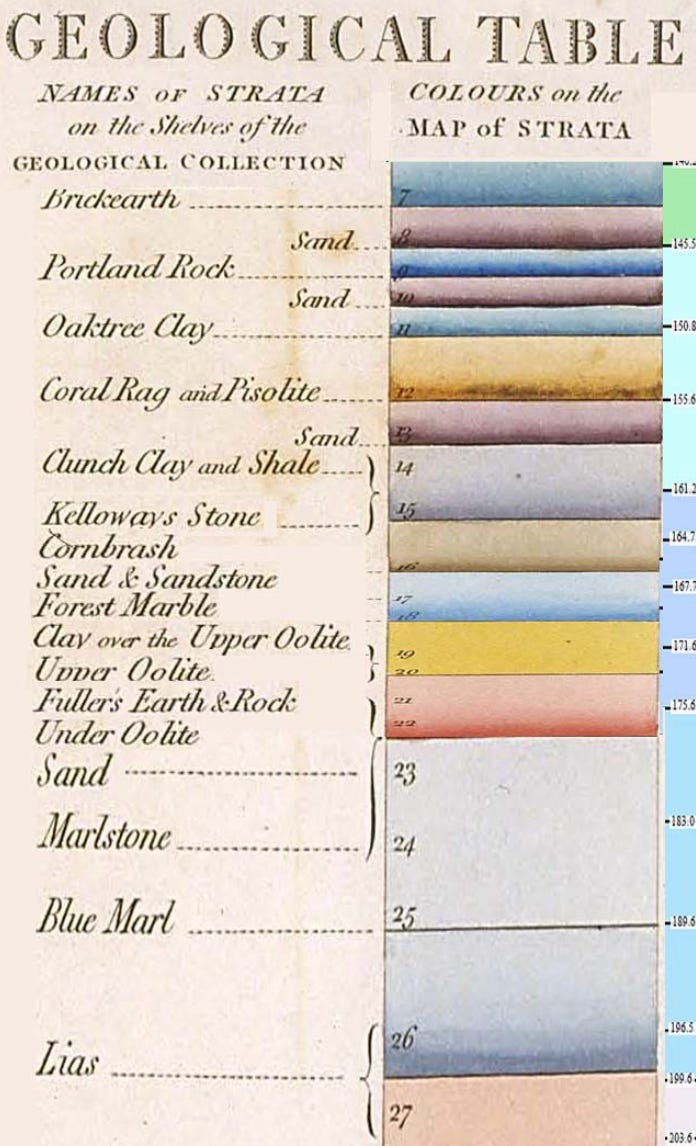
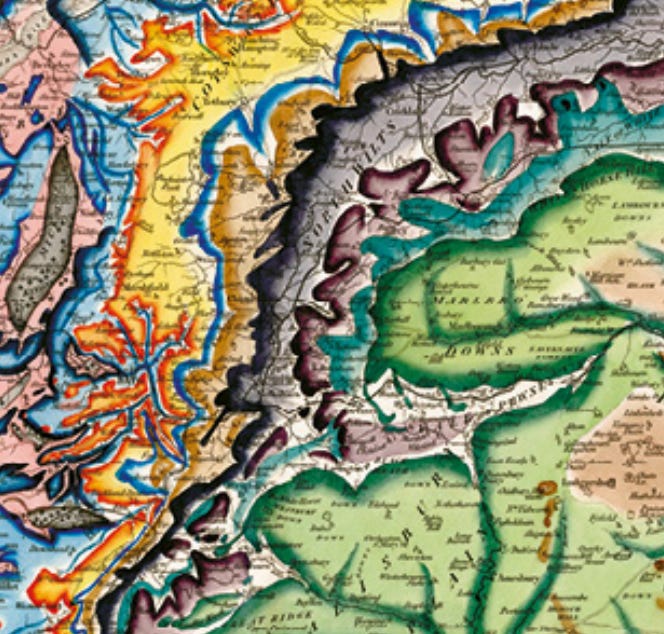
The result of his life’s work was the first geologic map covering a large area in such detail; a massive chart, eight feet tall and six feet wide, titled: The Delineation of the Strata of England and Wales with part of Scotland; exhibiting the Collieries and the Mines; the Marshes and the Fen Lands originally overflowed by the sea; and the Varieties of Soil according to the Variations in the Substrata; illustrated by the Most Descriptive Names.
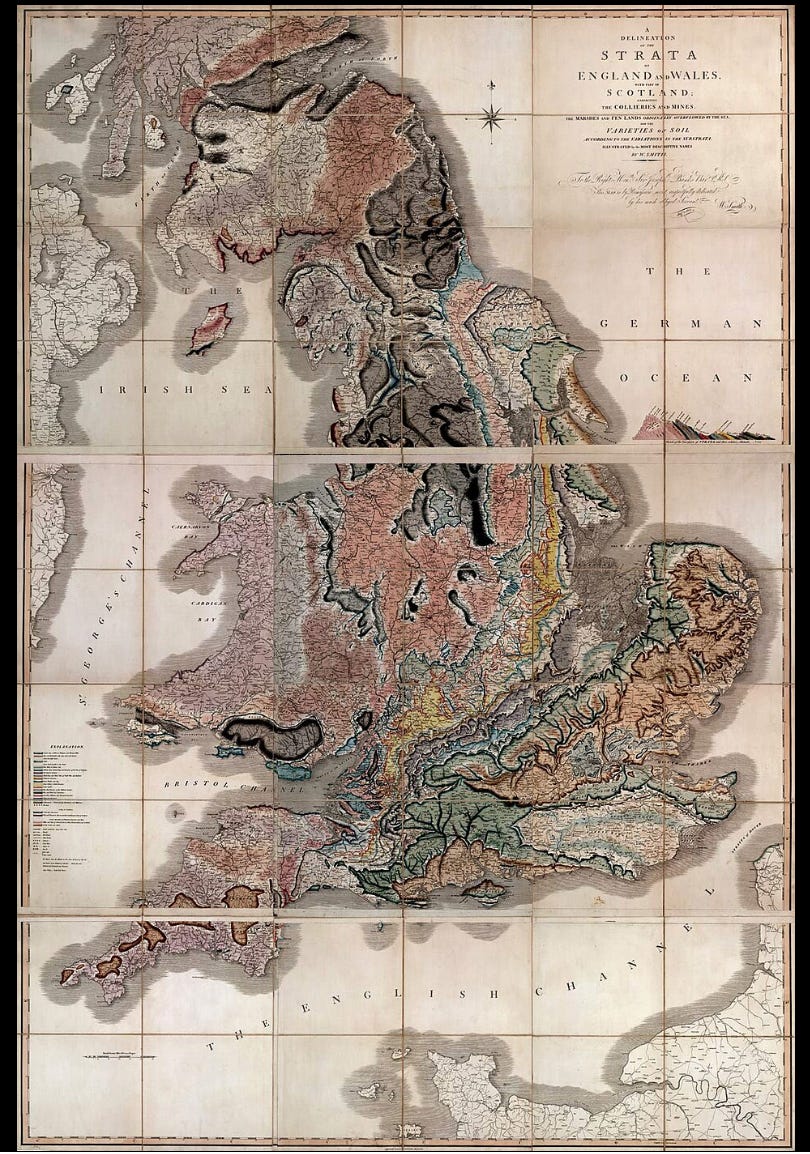
Winchester spotlights the significance of Smith’s work thus:
The fact that one half-educated Oxfordshire yeoman working alone — with compass and notebook and clinometer1 and an abiding appreciation of the beauty and the importance of fossils — could surmise with such accuracy what a thousand surveyors and geologists have in the decades since only succeeded in confirming, is little short of a miracle.
The question at the top of this essay might not have occurred to someone like William Smith. There were logistic and mechanical challenges. There were disbelievers. There was blatant class-ism (an unstudied man surely could not have come up with these ideas on his own). And there was the complex bending and folding of rock layers over time for which there was no known mechanism. (The idea of plate tectonics would not enter the popular culture for another 150 years, in the 1960s.)
He was, as Winchester summarized, “stubborn and visionary, highly motivated, and single- minded. He never once gave up nor ever thought of doing so.”
Here is what I admire about this man’s life calling: the drama of his trials was his own; his peer group was small, supportive, but distant from Smith’s private and solitary craft; he bore the burden of his financial debt and made good on his promises; furthermore, as the consequences of any of his decisions, no fellow kinsman was swept up in the vagaries of his occupation.
As I see it, William Smith lived his life without need of guarantees of any sort. He ran the all the risks on his own.
Another version of the question above might be: “What is something I would attempt to do if I were guaranteed not to inconvenience nor perturb the spirit of any other soul?”
Any of various surveying instruments for measuring angles of elevation, slope, or incline, as of an embankment (wikipedia)
Loved this! William Smith: Someone I need to know more about. I did verify that he was in no way related to John Smith. :)
Have you read "Why Fish Don't Exist?" https://en.wikipedia.org/wiki/Why_Fish_Don%27t_Exist
From the vantage point of someone who dedicated a life to a single-minded mission, they are similar. But the costs are not the same at all. It is memoir and historical fiction, and wonderful.
Fascinating! Love the topic, the writing, the images too!