

The traditional phrase is “I’ll believe it when I see it.” First hand experience (seeing for oneself) is the best way to assess whether something is true or not. So the saying goes. This alternative implies that belief comes first, and seeing the evidence is the result.
I was tuned into the word “believe” for days. Listening for it. Watching for it in print. It is used in a surprising number of contexts.
Before the New York Knicks won the NBA championship, a Spurs victory was predicted as highly likely; by some measures they had a 99.6% probability of winning. New York Mayor Mamdani used this idea — “a .4% chance” — as a theme in his speech at the Knicks’ parade.
There is one thing the pundits don’t get about this team, that they don’t get about this city — it is in that .4% when we go to work… It is in that .4% that [coach] Mike Brown keeps his team believing.”
While I was visiting a new vet with my sweet yet reactive dog, the young, bright-eyed technician gave me instructions on how to get a urine sample from Sienna. I admitted to the tech, “You make it sound easy. But I’ve never done this before.” Without hesitation she looked me in the eyes and proclaimed, “I believe in you!”
The title of this piece is often attributed to Wayne Dyer (American self-help author, 1940-2015) but I became familiar with it through photographer and motivational speaker Dewitt Jones.
I was introduced to his photography from the book Robert Frost: A Tribute to the Source (1979 Holt, Rinehart and Winston). Forty-four of Jones’ color photographs grace this collection of some of Frost’s best poems. The accompanying biographical text by David Bradley1 connects the poet and the natural world of New England.
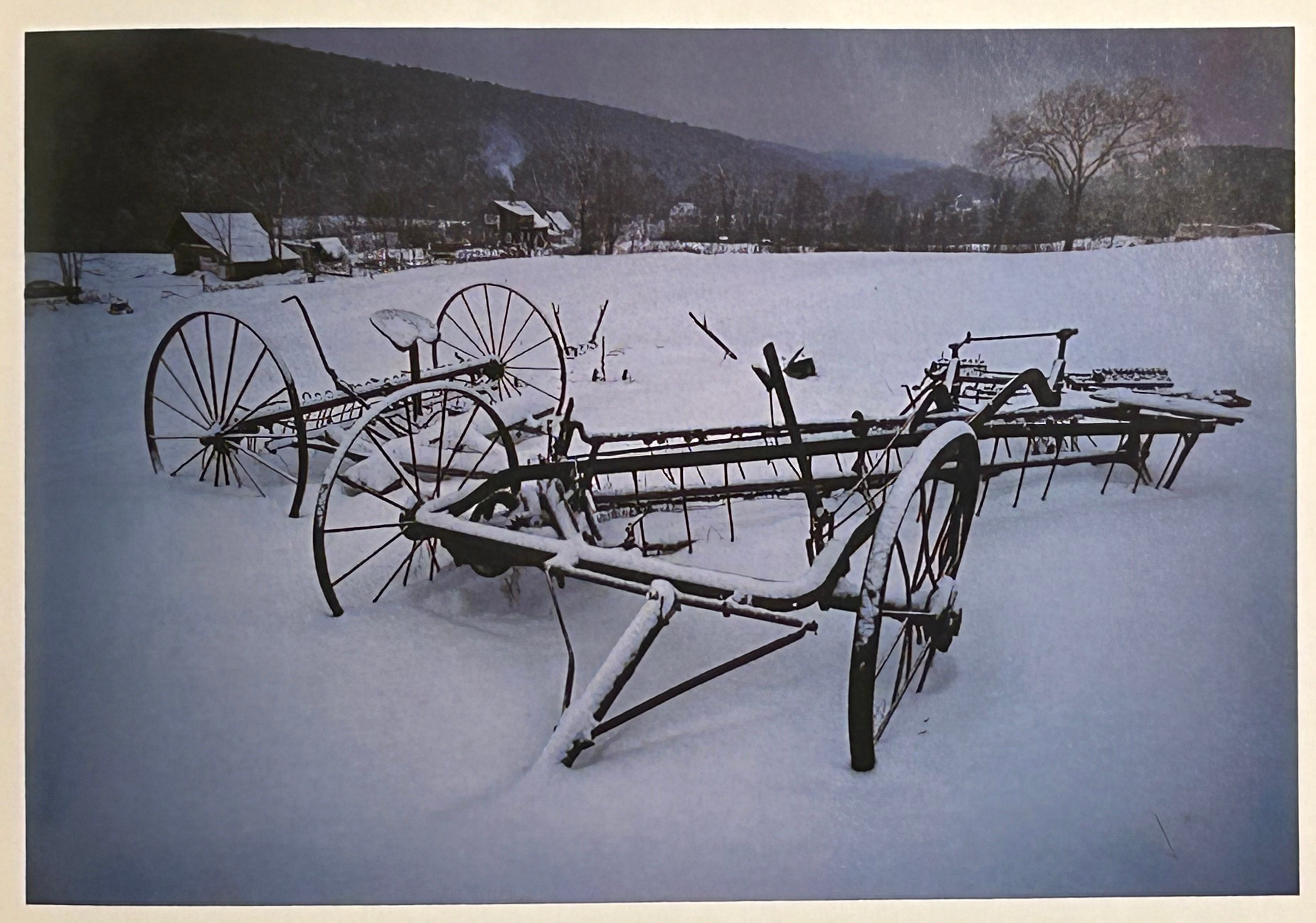
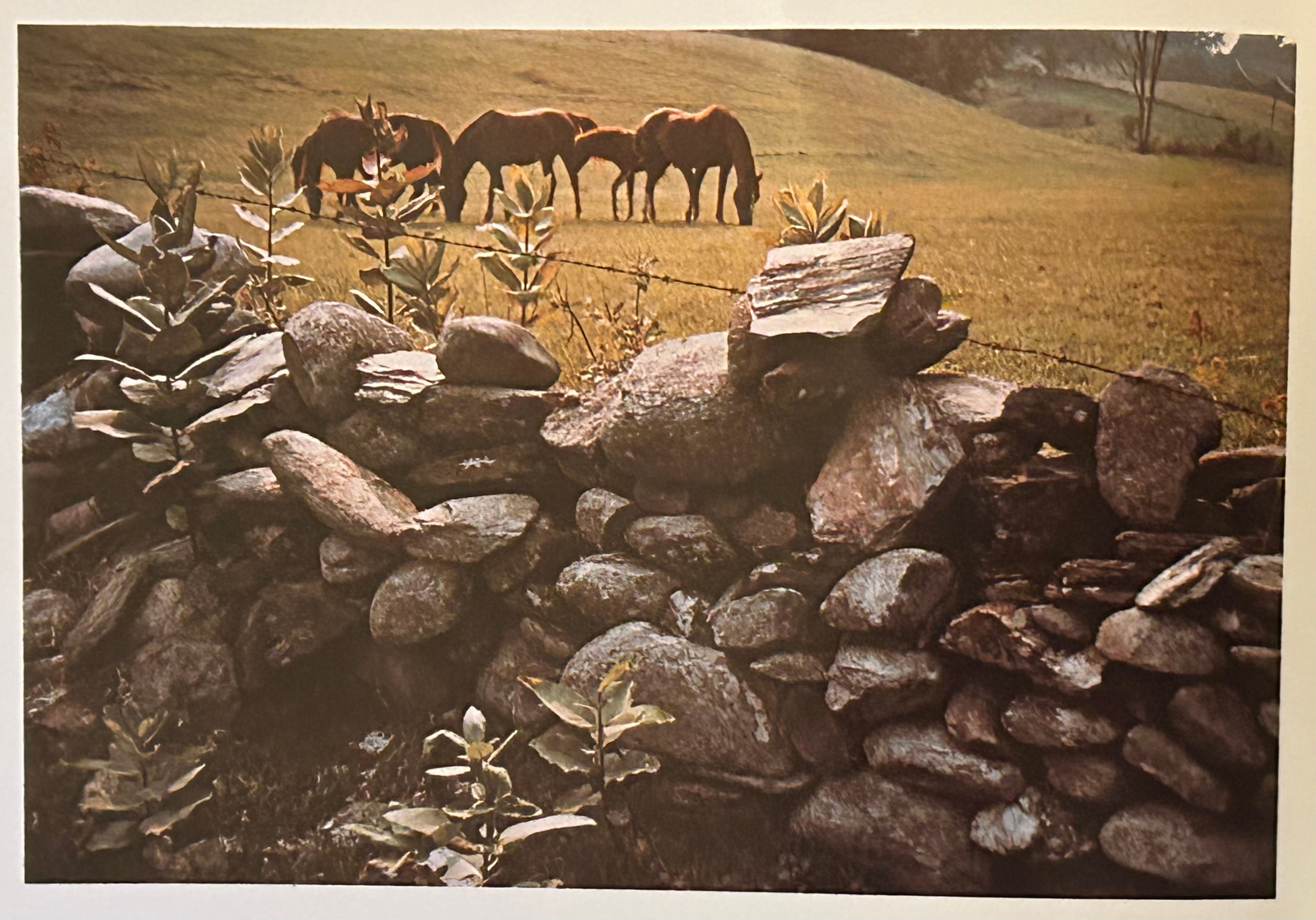
Jones went on to become a motivational speaker. Years ago I attended a seminar on progressive leadership concepts, and one of his short films, Celebrate What’s Right with the World, was part of the presentation. This concept of looking with the expectation of seeing possibility influenced his work as a photographer. Simply put, if you believe there is a beautiful possibility in the subject you are photographing, you will try this angle, try that background, experiment with lighting and so on. Eventually you get an amazing shot that you might have walked away from if you had stopped looking.
Here is an excerpt from his Lake Tahoe TEDx talk:

I figure that no matter how dry and desolate, no matter how bleak and devoid of possibilities a situation might seem, if I could just celebrate the best in it — in this case by dropping down into that slot canyon and looking back the other way — I could find a perspective that would transform the ordinary into the extraordinary.
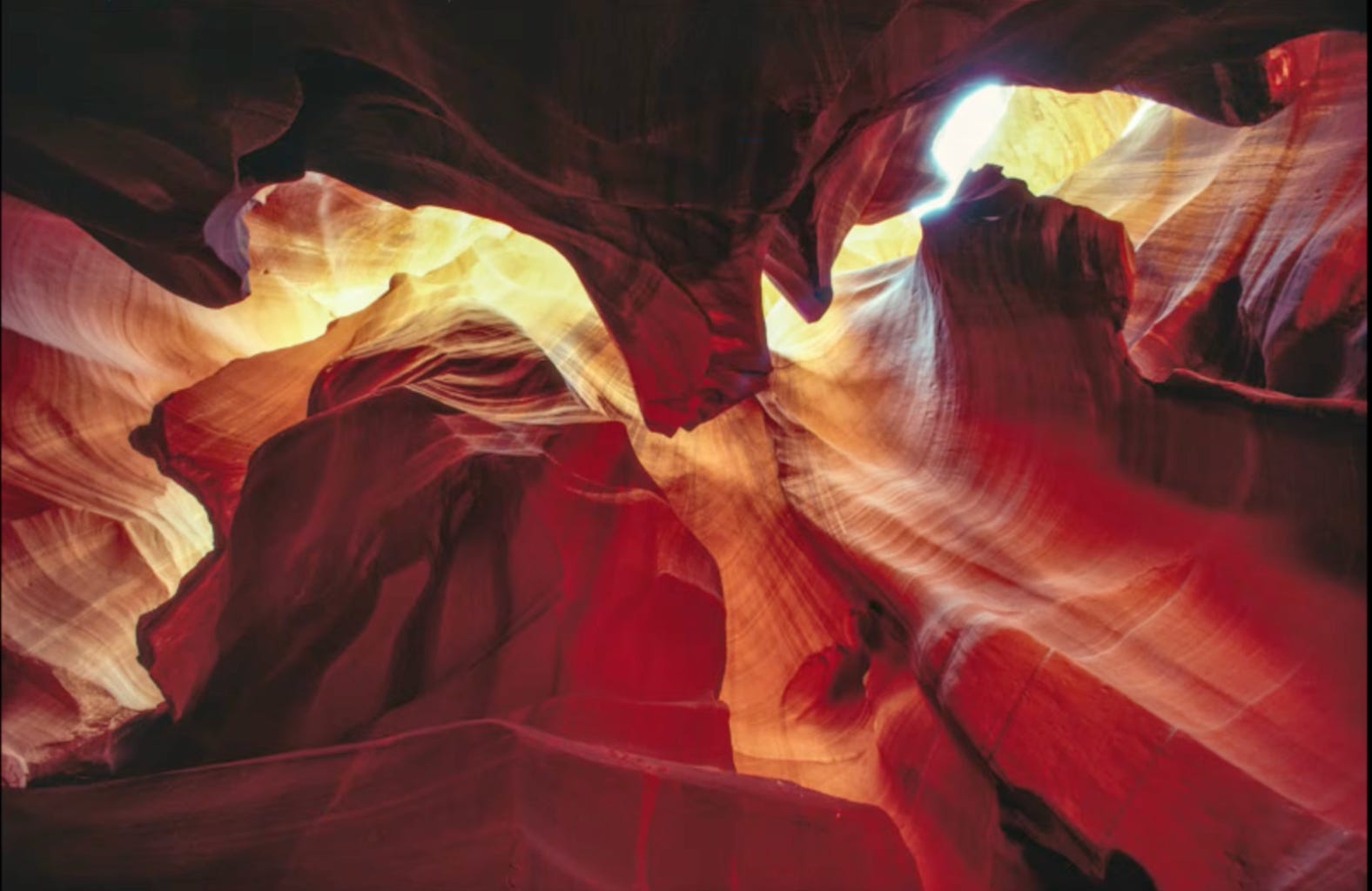
Belief, in this case, is a tool — an attitude, a philosophy if you will — that encourages further exploration despite setbacks, despite the lack of evidence that something great might happen.
There is an implication here for progressive management theory that I found hard to sell. When a participant asked “how do I deal with my problem staff person,” I found myself saying, almost by reflex: “First, stop referring to the person as a problem. If you look with the expectation of seeing a problem, you run the risk of only seeing a problem. And you might miss seeing anything else.”
There is a benefit to believing that something is there, even if it isn’t obvious. In writing this essay, I made an implicit distinction between religious faith in a beneficent Almighty and these other types of believing: belief in self, belief in a cause, belief in the viability of a start-up organization, belief in the efficacy of a certain dietary regimen, belief in the value of teamwork. Those sorts of things.
Having belief seems to generate or encourage confidence in oneself. Belief nurtures the patience required to keep looking, to keep striving. It nudges one to persevere and take the next step rather than throw in the towel. It imbues one with tenacity. Moreover, practicing belief strengthens the capacity to use an optimistic and appreciative lens through which to see the world, to confront obstacles, and to see possibilities.
Sign me up, right? I mean, look over the bolded words in the paragraph above. All of these benefits attend the adoption of a positive mindset. Where is the downside of believing?
You could also ask “What is the downside of a hammer?” There is none. It is arguably the perfect tool for doing things that a hammer can do.
Same with belief. And just to follow the tool analogy, adopting belief as a mindset is one tool in the toolkit. I would like to think that my personal toolkit contains, among others, my curiosity about how things work and appreciation for the many ways that things break; my Irish sense of doubt; my internal gauge of risk-tolerance; my endless search to see holistically, which often includes assessment of multiple viewpoints, some optimistic, some skeptical some neutral.
I’m not saying this is the right toolkit, only that it is the one I have and use a lot.
I have been listening for affirmations, all the different ways people in conversations express confidence. They range from the simple “I believe in you!” to the more complex
“I believe in America. Not the current executive branch nor the repressive and corrupt wiles of certain men. I believe in our creed, in the founding ideals, and in the American people who work with each other every day.”
I give ‘We the people’ good odds.
On a closing note, here is Dewitt Jones talking about the light within, in reference to the montage below:
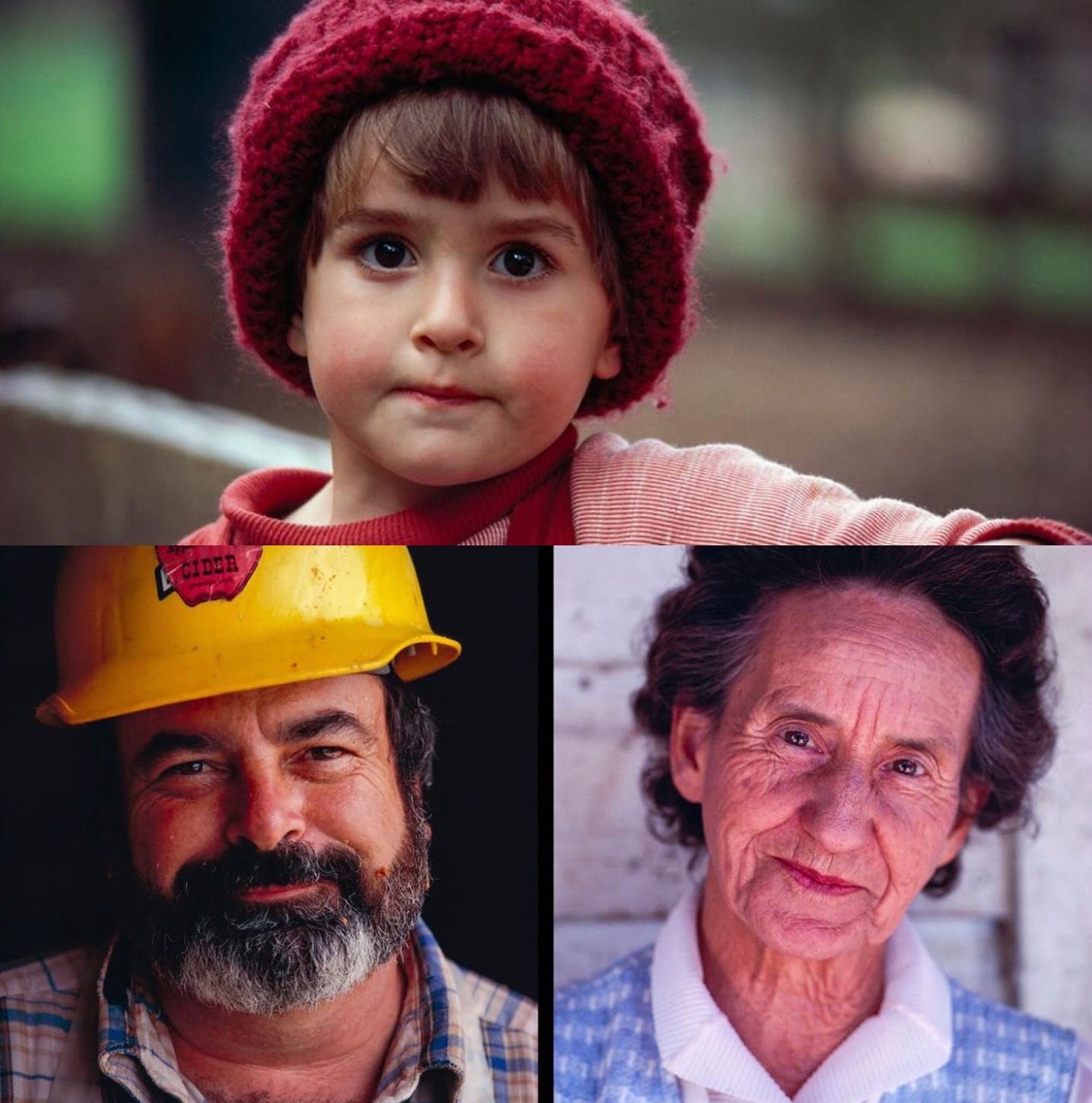
I could show you a thousand pictures of this light, but I’ve chosen three - an eighty-year-old great-great-grandmother, a cider press operator, and my own son.
Look at these faces tonight, then let the faces of all the wonderful people in your life fill your mind. See, feel the light in their eyes. Then stretch further to the faces of all the people, both known and unknown, in your community, your country, your world.
It’s the same light.
Small world: David Bradley (1915-2007, obit here), in addition to being a great fellow, was an unbelievable polymath: author, physician, anti-nuclear advocate, professor at Dartmouth College, champion skier and state legislator. My wife has been close to the various and amazing family members for decades.
Beautiful, Papa. On believing in America, another terrific piece: https://societaldynamics.substack.com/p/what-to-an-immigrant-is-this-fourth
How wonderful, Stew! Is that end quote yours? Spot on! This is timely and inspiring. We see what we expect to see, and more often than not, I choose to see possibility. Thank you!