

What is the last thing you see when you turn in at night, before switching off the light — and the first thing you see when you wake up in the morning?
For me, it is this corner of our bedroom. There is a small table populated from time to time with various books that invite a read. There is also a small book shelf displaying poetry, old journals I have kept, and other books, fiction and nonfiction.
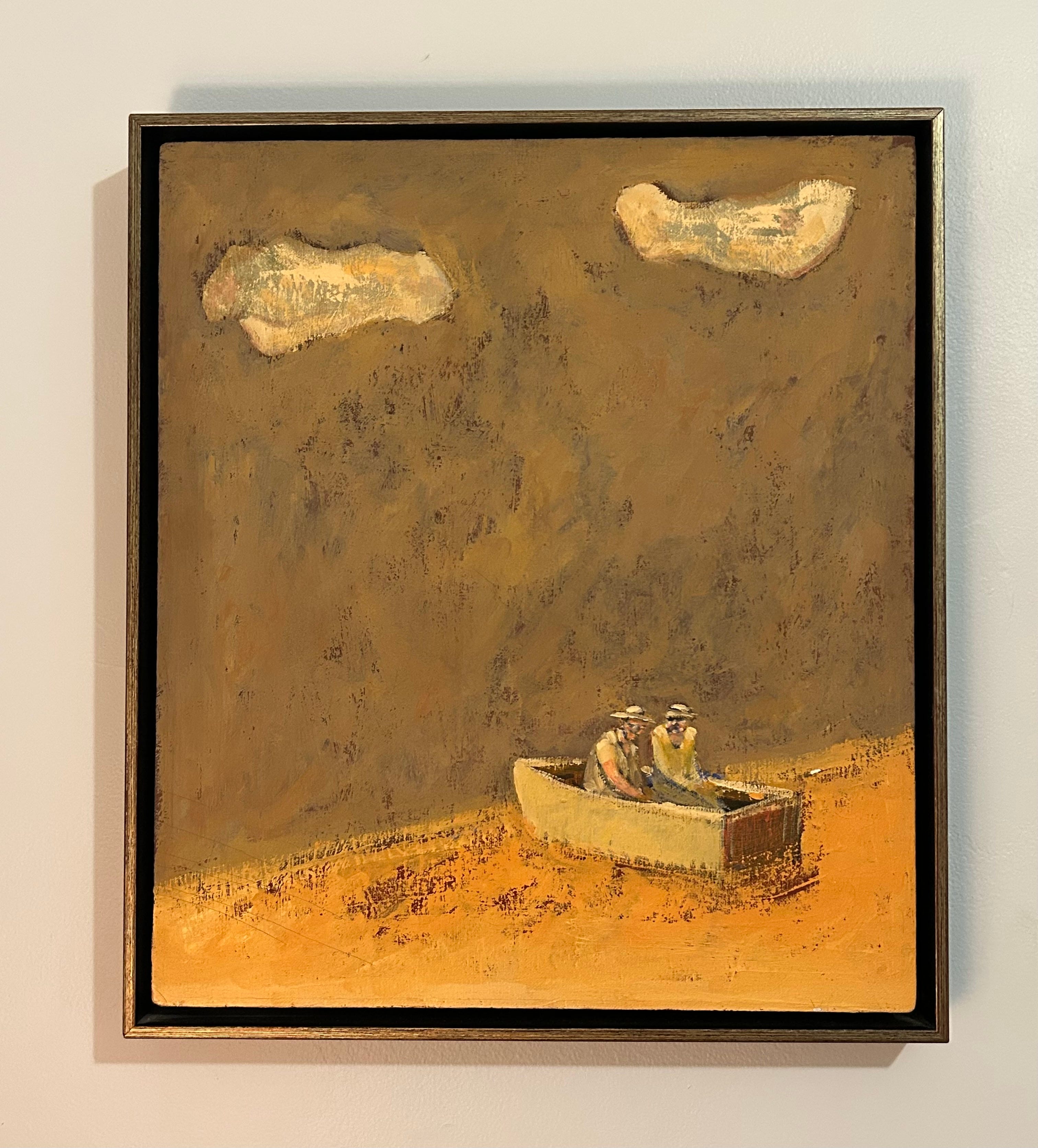
But the artwork more often than not draws my eye — two nautically themed pieces. To the left is a replica of J.M.W. Turner’s oil-on-canvas The Fighting Temeraire tugged to her last berth to be broken up 1838.
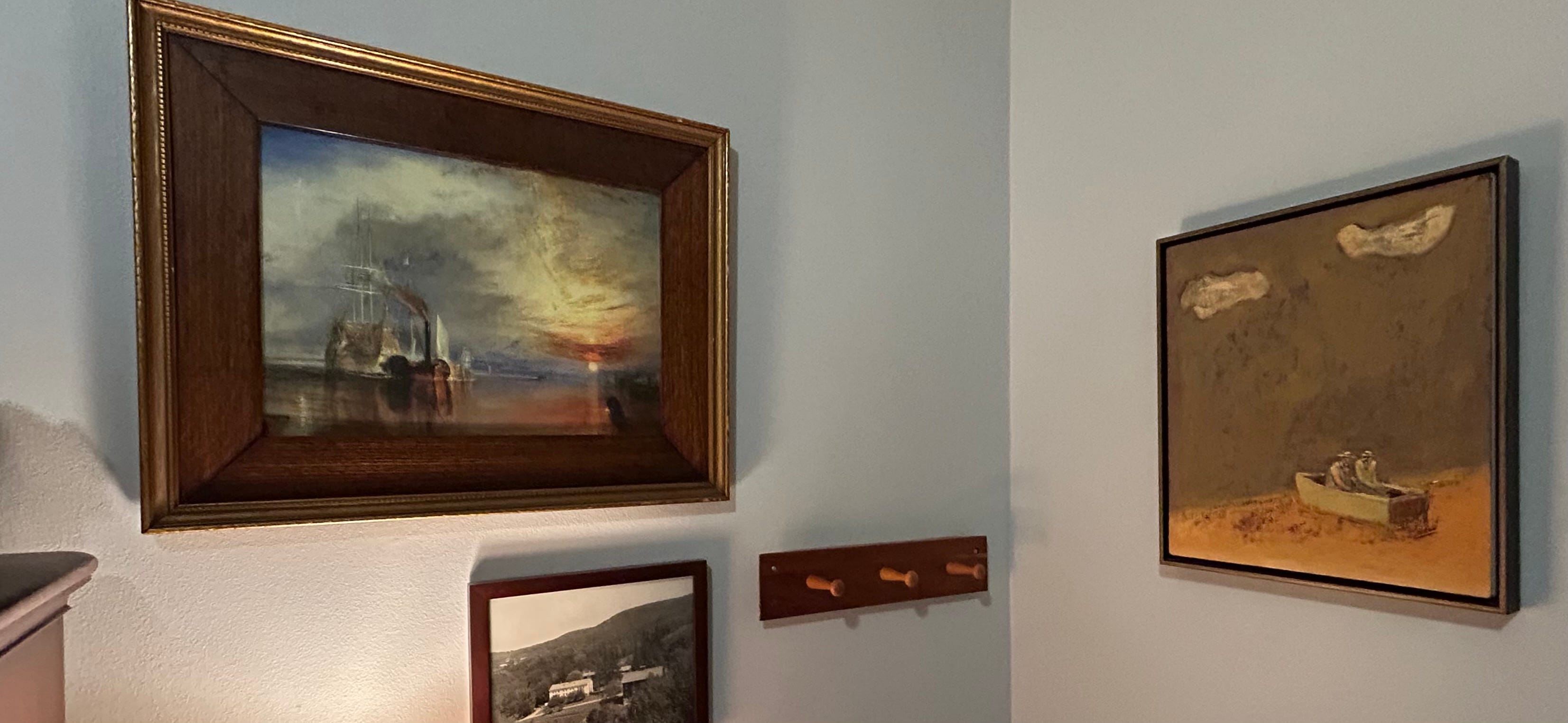
I inherited the picture from my maternal grandfather. When he moved to a one-room assisted living situation in the late 1970s he had winnowed his possessions to a minimum. This was one of three pictures on his walls when he died in December 1987.
The Temeraire was a legendary 98-gun ship, famous for her contribution to British victory in the Battle of Trafalgar. Launched in 1798, the ship served in the French Revolutionary and Napoleonic Wars. The masted sailing vessels of the day eventually gave way to steam-powered ships. It was this transition period that Turner wanted to capture in this single image of a smoke-belching tugboat hauling the ghostly Temeraire to the junk yard. The close of an era is symbolized by the sun setting over the Thames.1
I will never know Granddad’s feeling about the painting, save that he liked it so much that he retained it through all of his downsizing. I can guess it held some Anglo-Saxon nostalgia for him; he was born in Middlewich2, England during its industrial heyday. I have written about his father, the chemist John Henry MacMahon, in connection with the company town of Saltville, Virginia. (See Saltville part 1 and part 2).
Granddad had a gift for memorizing Victorian era verse, so it is easy for me to imagine that he could recite Sir Henry Newbolt The Fighting Téméraire, with its closing lines:
Now the sunset’s breezes shiver,
And she’s fading down the river,
But in England’s song forever,
She’s the Fighting Téméraire.
The painting always seemed wistful to me. The age of the tall mighty ships was coming to an end, and the inevitable industrial machine of the future is driving straight at us, just like the tugboat.
There is an alternative view, however. According to art historian Matt Wilson, the current interpretation of The Fighting Temeraire is incorrect. Turner was not expressing nostalgia for a bygone era. On the contrary, Turner wanted to celebrate modernity and demonstrate how it is possible to find beauty in every manifestation of human creativity:
Frequently it’s been accepted as a melancholy image, a forlorn lament for past glories and a lost way of life. But this misses its essential point. The Fighting Temeraire is really about transformation and the inevitability of change rather than nostalgia. The most important lessons to learn from The Fighting Temeraire are about Turner’s attitude and outlook. It embodies his refusal to be daunted by newness or enslaved by traditional artistic values. His quest to find the beauty and grandeur of modern experience, and leave the past behind, is magnificently on display in The Fighting Temeraire.3
That was 1839.
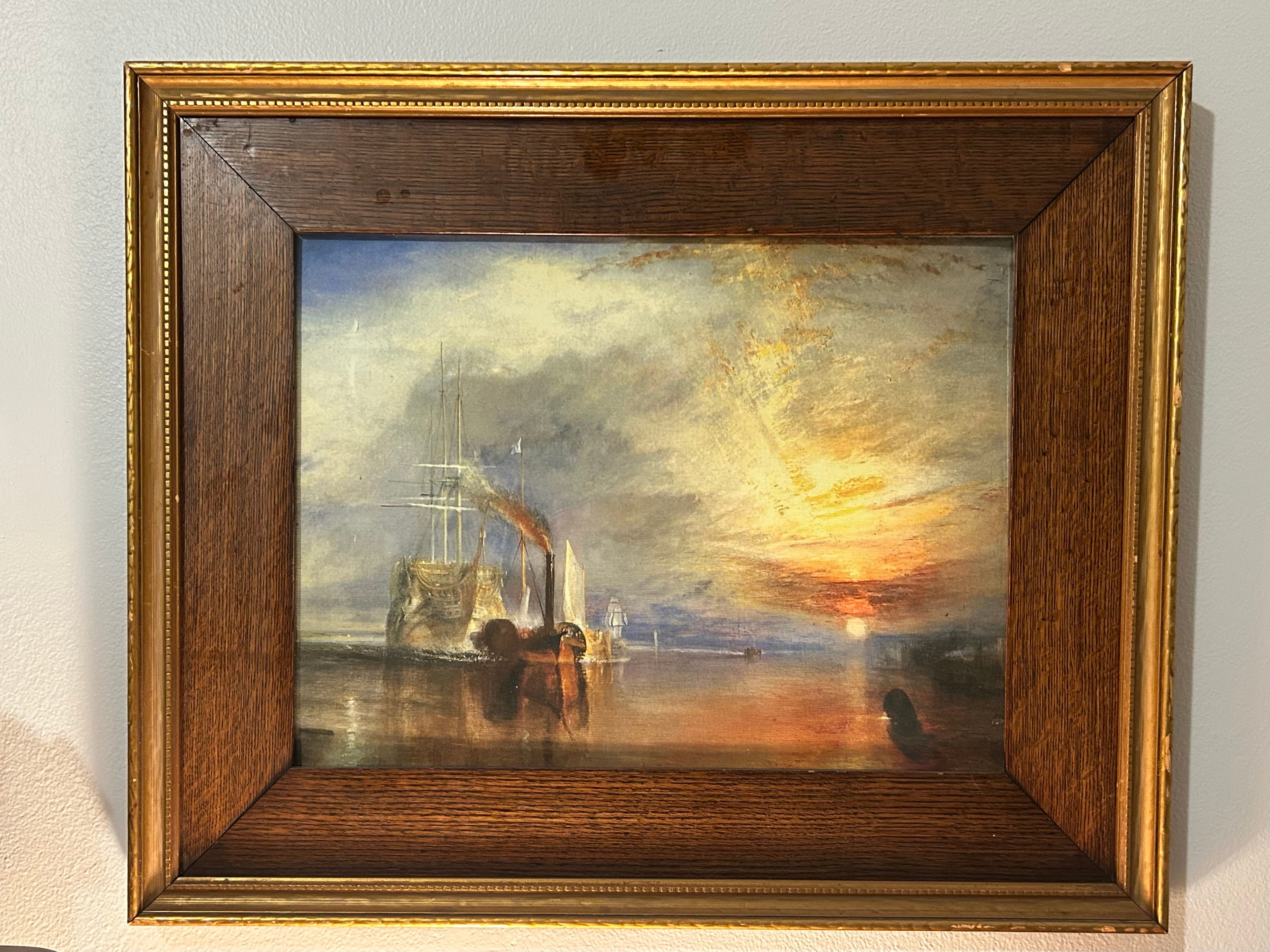
A more contemporary piece hangs to its right on the adjacent wall. I bought at the Delaware Center for the Contemporary Arts in Wilmington when I visited with my mother in 1999. This one is by New York artist Lance Goldsmith.
It depicts two people sitting in a boat, afloat on a surface that is most un-sea-like. The horizon line is slanted and looks more like a floor meeting a wall. The colors are all wrong. Two odd little cloud shapes hang over the scene. The people seem relaxed, and are gazing out perhaps toward the viewer. The boat appears to be equipped with neither oars nor motor.
This oil-on-canvas original measures 14 by 17 inches and is titled Navigational Error and I love it. It is at once whimsical, if not outright comical, and foreboding — any one of us might find ourselves in a situation where nothing is as we expected and there is nothing to do but wait.
I regard both these images at night before I take to the covers. To my left, an era that was gone before my time. Turner has captured kind of beauty in the drab industrial world to come. To my right, a modern statement — a classic theme of two people wearing sun hats enjoying a day out on the water, unaware of (or resigned to?) the fact that nothing makes sense beyond the company of each other.
That was 1999.
So much had happened in the 160 years since Turner’s painting.
And even more, it seems, in the past 27 years since these two people lost their bearings.
A brief scene in the James Bond film Skyfall captures a popular view about the painting. In the scene, Bond (Daniel Craig) meets Q (Ben Whishaw) in London's National Gallery, and they sit in front of this painting. The younger, tech-savvy Q takes a jab at 007, an old-school field agent, when Q says: "It always makes me feel a little melancholy — a grand old warship being ignominiously hauled away for scrap."
Middlewich was known in Roman times as Salinae because of its surrounding salt deposits. Where there be salt, there be industry.
From an April 2025 BBC programme