

This is my seventy-fifth essay. The previous one explored the scarcity mindset, and this one would have talked about the mindset of abundance, but I don’t think I can pull it off.
Instead, this is about my dog’s last days.
I promise not to craft the kind of memorial that could leave you in a state of vicarious grief. Many reminiscences in prose and verse have dealt with the loss of a beloved pet: E.B. White (“Bedfellows”), Rudyard Kipling (”The Power of the Dog“), Mary Oliver (“The First Time Percy Came Back”), and Lord Byron (”Epitaph to a Dog“ — with the famous line about how the dog had “all the virtues of man without his vices”).
And many others — enough in fact to sustain a small literary sub-genre.
One of the best tributes that I am aware of is James Thurber’s “Memorial” (an essay in “My World — and Welcome to It,” 1942) — which I will return to in a minute.
So I won’t share with you the forested walks we took over nearly nine years; nor will I attempt a sketch of her character which would lapse easily into the use of anthropomorphic terms; and least of all will I attempt the chronological slideshow, from her adoption at a no-kill shelter (thanks for my sister Pat, who worked there), and her early dog training, to her travels by car to Door County, Wisconsin (a favorite place), and the many interactions created by the life patterns of three mammals sharing the same house.
Our sister, Martha, put it this way: the human relationship with a dog is one of mutual watching. We watch to see that their needs are met. We provide distraction (from vexations, such as cats), and treats and adventure. They watch us for patterns, for those occasional treats, and for opportunities to be a part of the scene.
If there was a group of people, Sienna wanted to be in the center, or at least nearby.
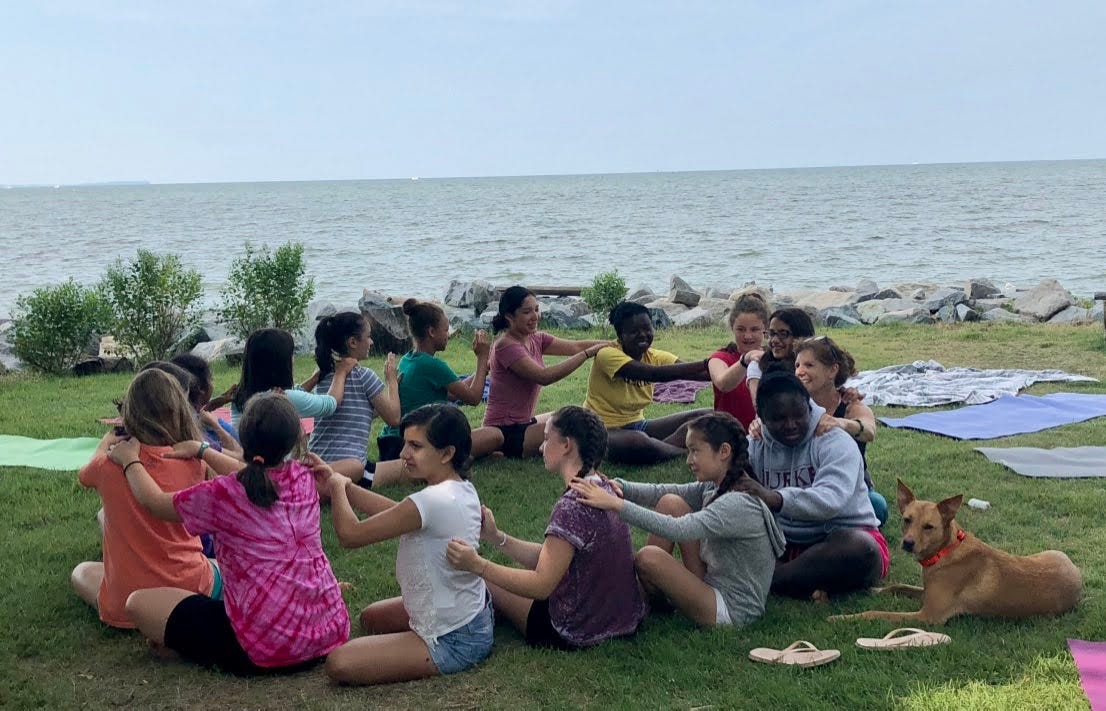
If I was alone in my chair, she settled into a place where she could face me. And so on, in various ways, we kept an eye on each other.
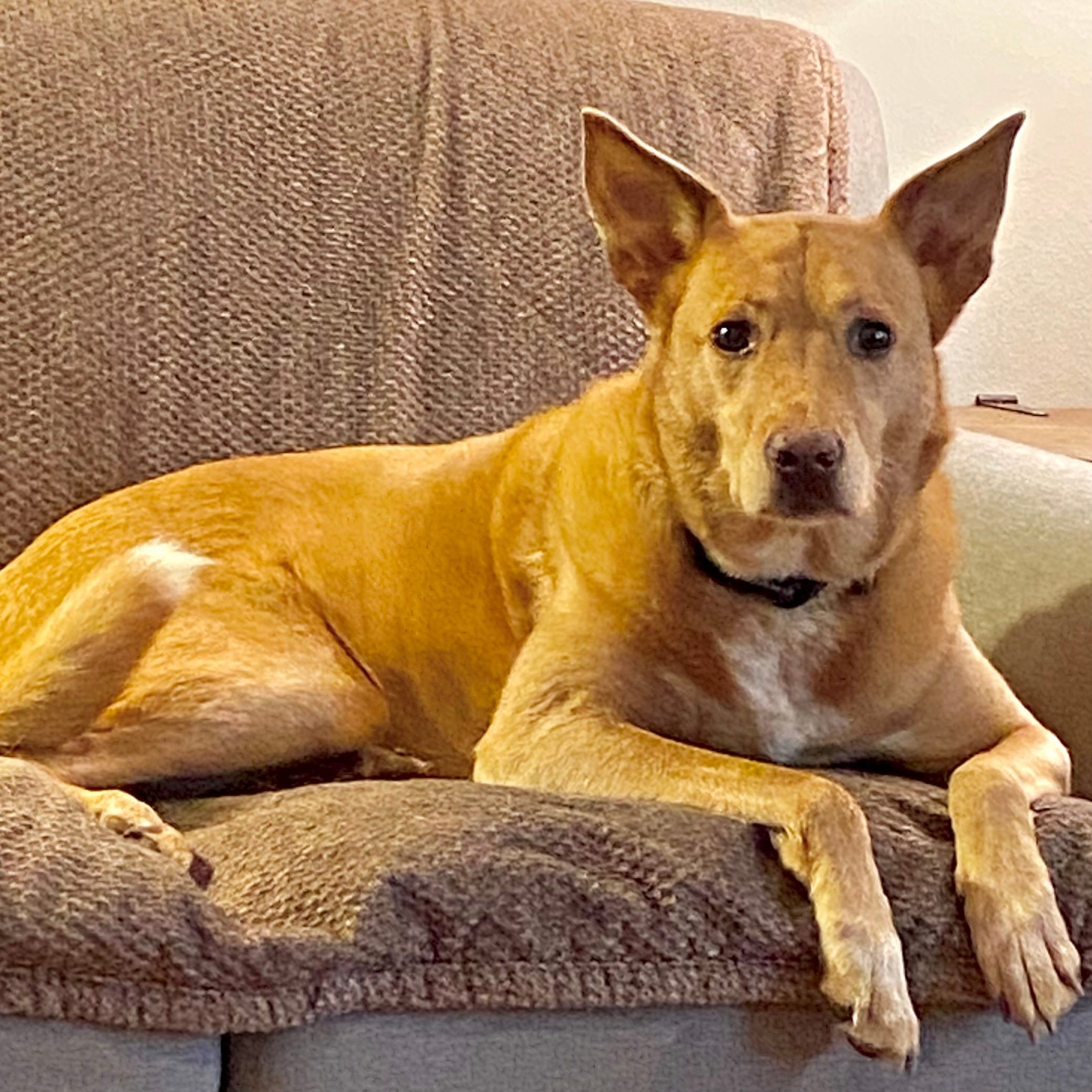
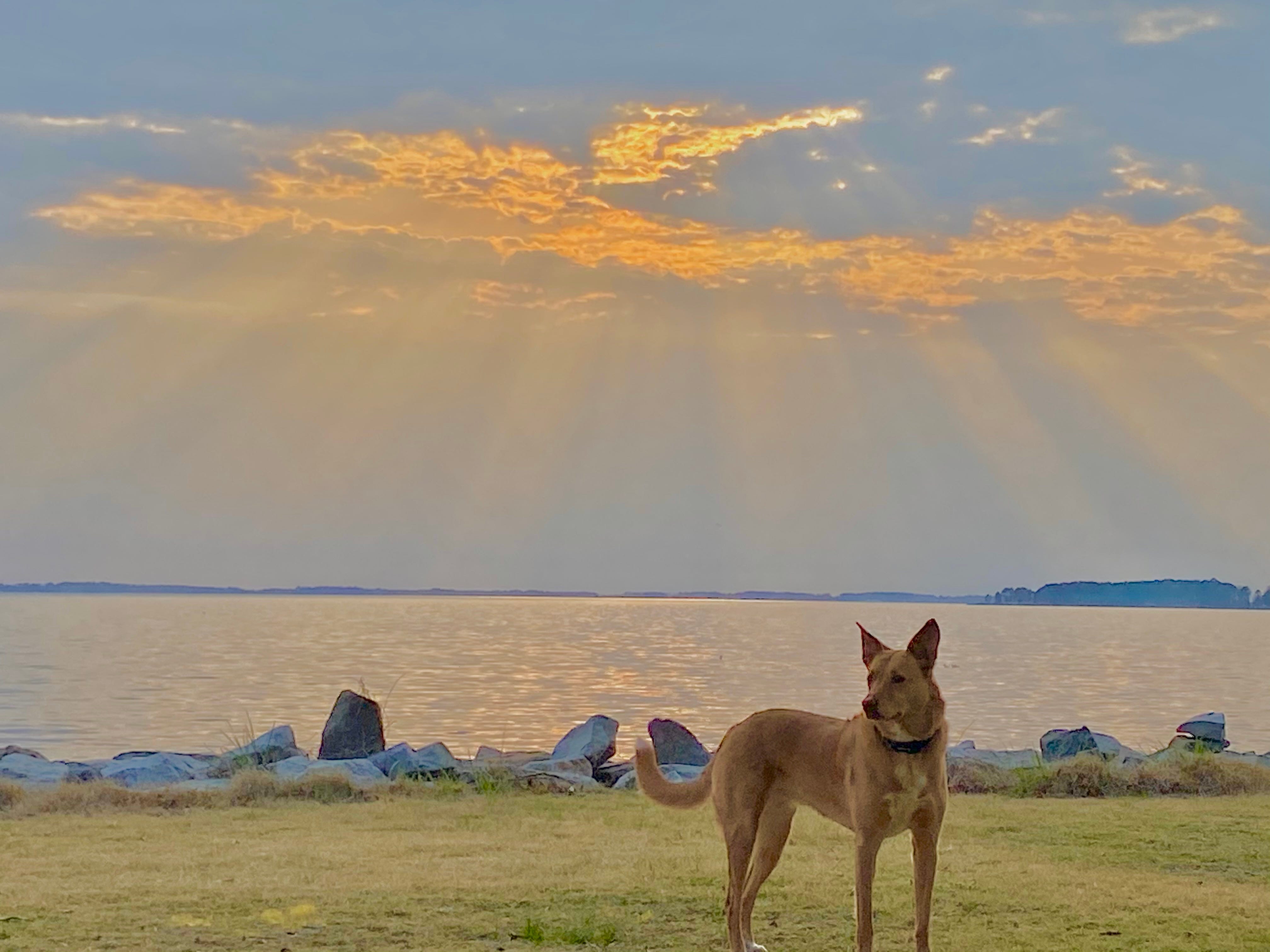
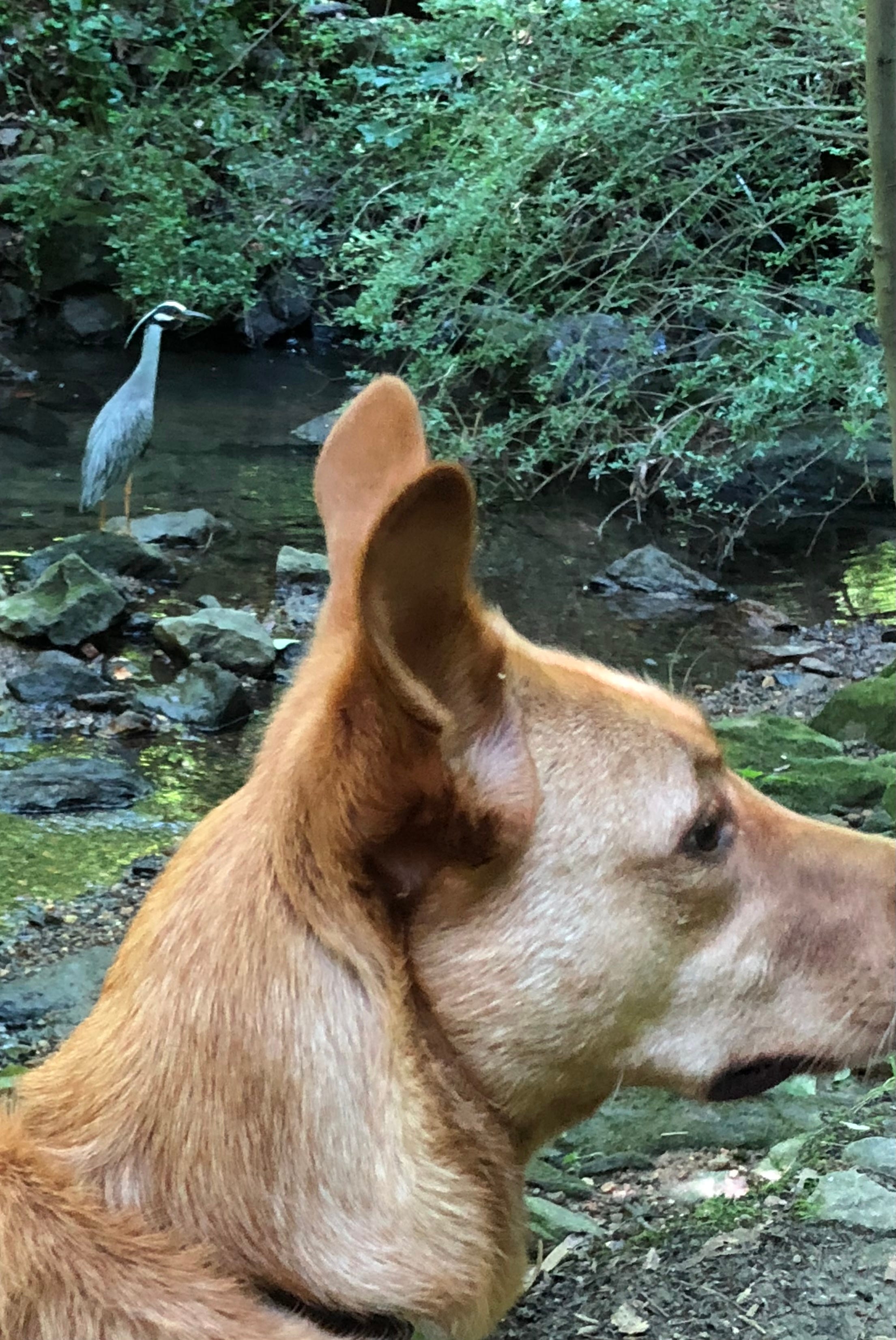
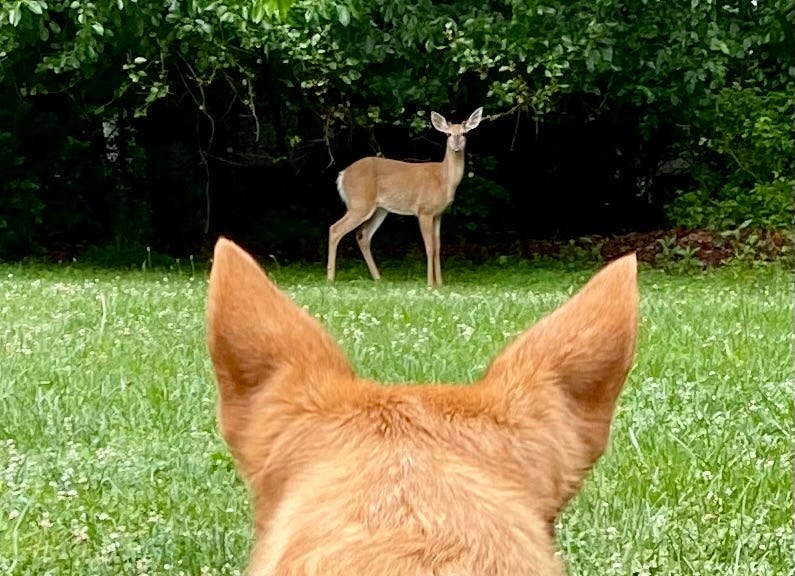
I’ll tell you, I will miss being seen, so completely, so constantly, so adoringly. I’d be blessed to be half the person she thinks I am. I am daily surprised by my level of sadness, learning to live on without that companionship.
My sister Pat has had her share of dog entrances and exits. We have talked about grief, how to prepare for it, how to live with it. She told me a story of having attended a shiva. A Jewish acquaintance of hers had lost her husband, and various people were offering their condolences. Pat overheard the words of one mourner, who I imagine had also recently suffered a loss and knew the path of grief. This person said, lovingly, “I can’t do a thing for you.”
We all get support from other humans who understand, but in the end, it is an inside experience.
Thurber talks about experiences from the dog’s point of view. Here are a few lines from Thurber’s ‘Memorial’ that I mentioned above:
The poodle won a great many ribbons in her bench days, and once won Best in Breed at Madison Square Garden. But she would have traded all her medals for a dish of asparagus.
She kept her sight, her hearing and her figure up to her quiet and dignified end. She knew that the hand was upon her, and she accepted it with a grave and unapprehensive resignation. “This,” her dark and intelligent eyes seemed to be trying to tell me, “is simply the closing of a full circle.”
Here is Thurber again. It’s a quote with an uncertain origin, though it is likely from his 1961 “Lanterns and Lances,” a collection of essays:
I never had a dog that showed a human fear of death. Death, to a dog, is the final unavoidable compulsion, the least ineluctable scent on a fearsome trail. They like to face it alone, enduring without sentimental human distraction the Last Loneliness, which they are wise enough to know cannot be shared by anyone.
I think that sums up where we are.
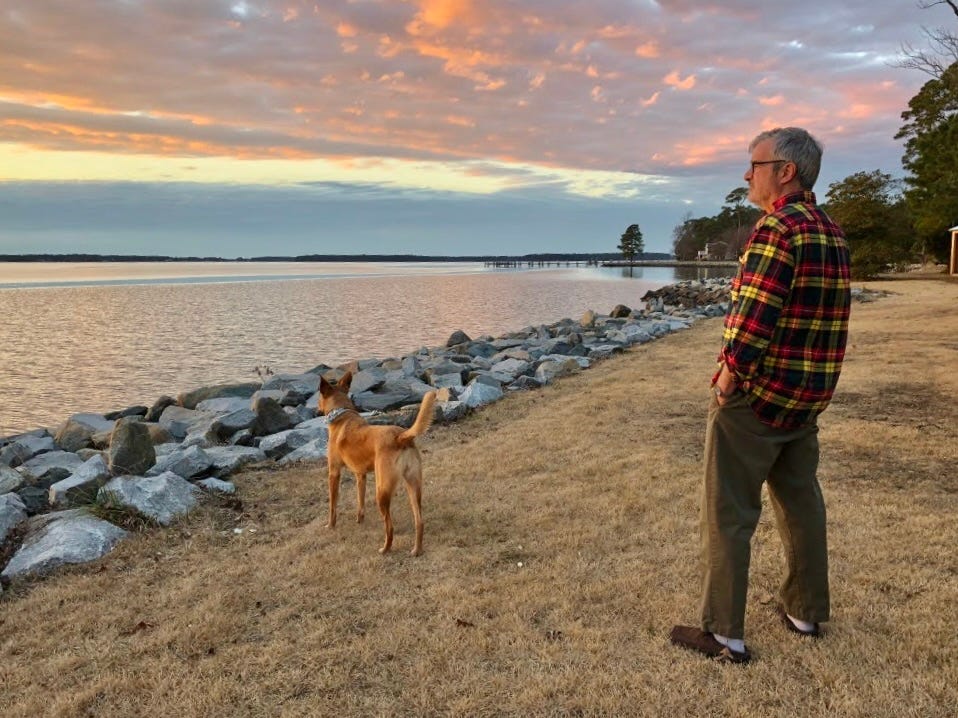
I am in tears over here. Especially the lines, "I’ll tell you, I will miss being seen, so completely, so constantly, so adoringly. I’d be blessed to be half of the person she thinks I am. I am daily surprised by my level of sadness, learning to live on without that companionship." Exactly how I feel about my dog Nick who died in 2020. I wish I could tell you it gets easier, but the pain can return on a dime with the right memory. As the quote goes, I can't do a thing for you. Except send love, which I am.
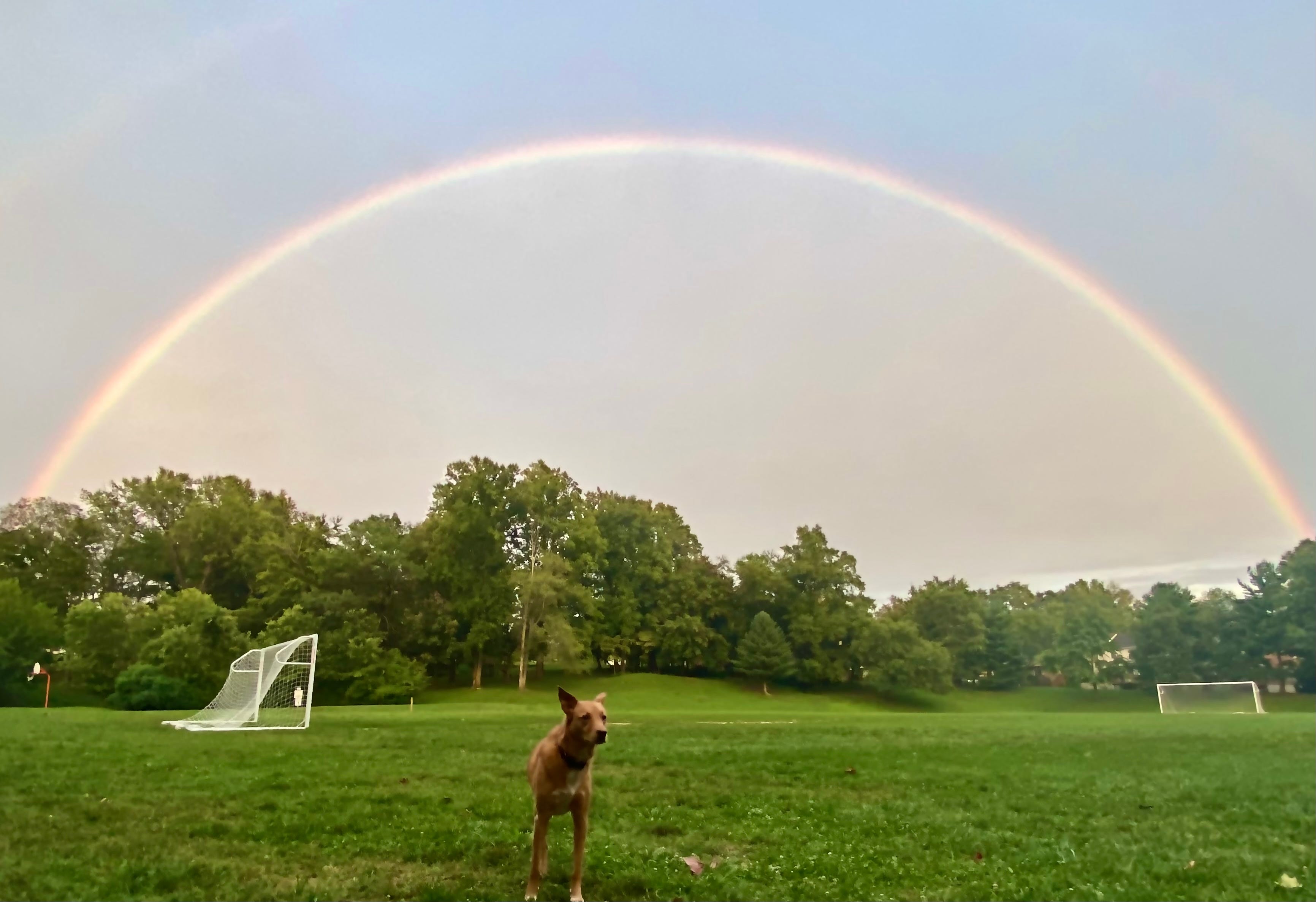
Beautiful Sienna. Ingrid said it well, vibrancy and affection. And joyful and welcoming and a loving companion. How she will be missed! The photos in this tribute to her are magical. Definitely thinking of you and Busy during this difficult time. I just encountered this Magpie song while looking for something else, and I think it must be for me to share it with you. https://www.youtube.com/watch?v=iC_JHrwT1oQ These photos, especially the rainbow photo, and the video of Sienna getting the newspaper down all those front stairs are how I will remember sweet Sienna. Sending love to you, Busy, and Sienna.