

Substack is like any other content platform — chock full of opinions about what you should be thinking about. There is a subset of content designed specifically to pepper your thoughts with fear about what might happen, will happen, or is happening already.
Recently I was on the most leisurely of explorations, poking around Substack to see who is writing about what. I learned, for instance, that there are five regions in the US where you do NOT want to be when things collapse. [Insert your own Charles Munch The Scream emoji here].
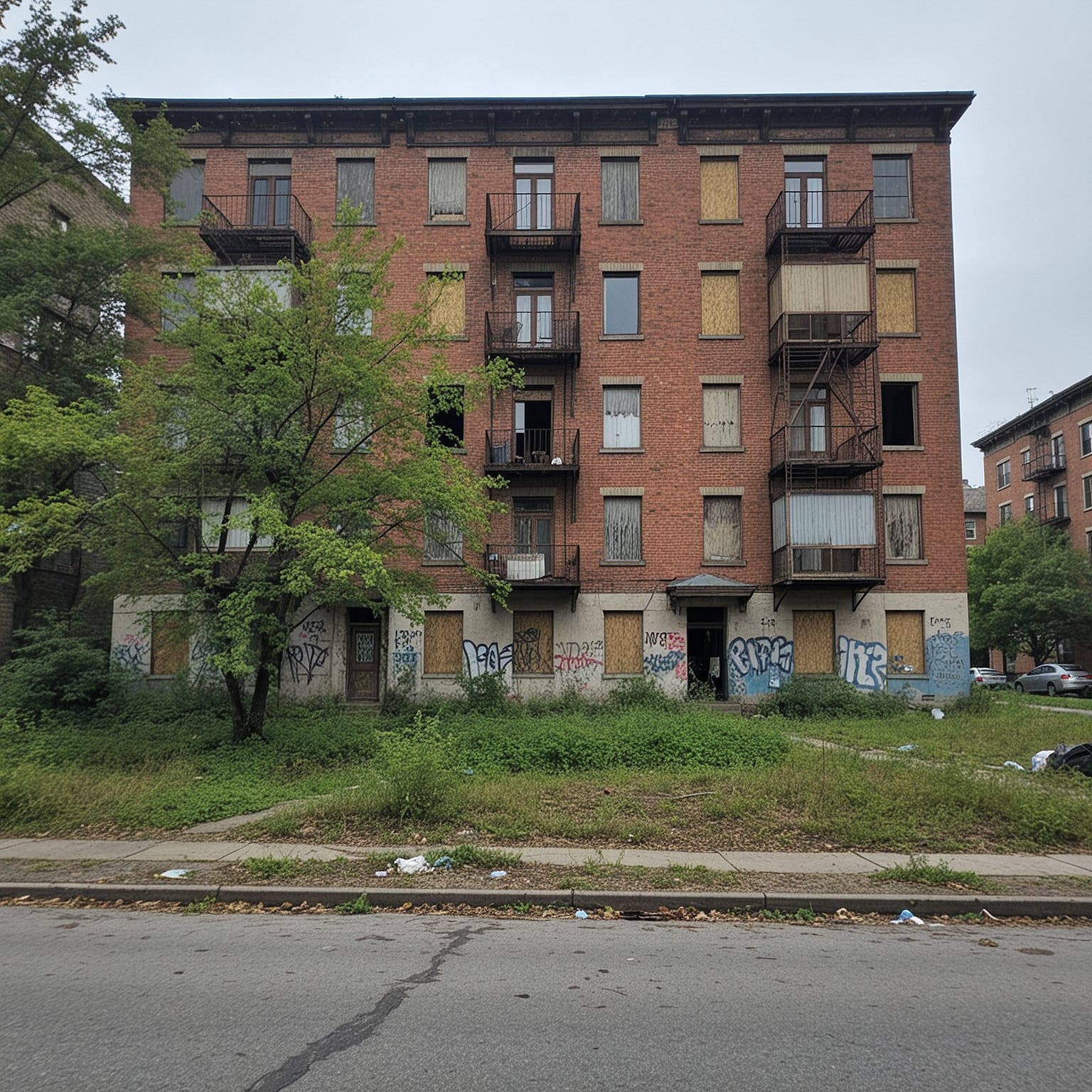
TL/DR.1 But I skimmed the five headings to make sure I was not living in one of those areas. Turns out, I have spent most of my life in one – the Washington DC - Boston Corridor, where the electric grid is as brittle as dry fish bones, obsolete infrastructure has minimal redundancies, and poorer areas face “increasing precarity” when the social order collapses. Reading this, I felt vaguely insulted.
Hey, this is my corridor you’re talkin’ about!
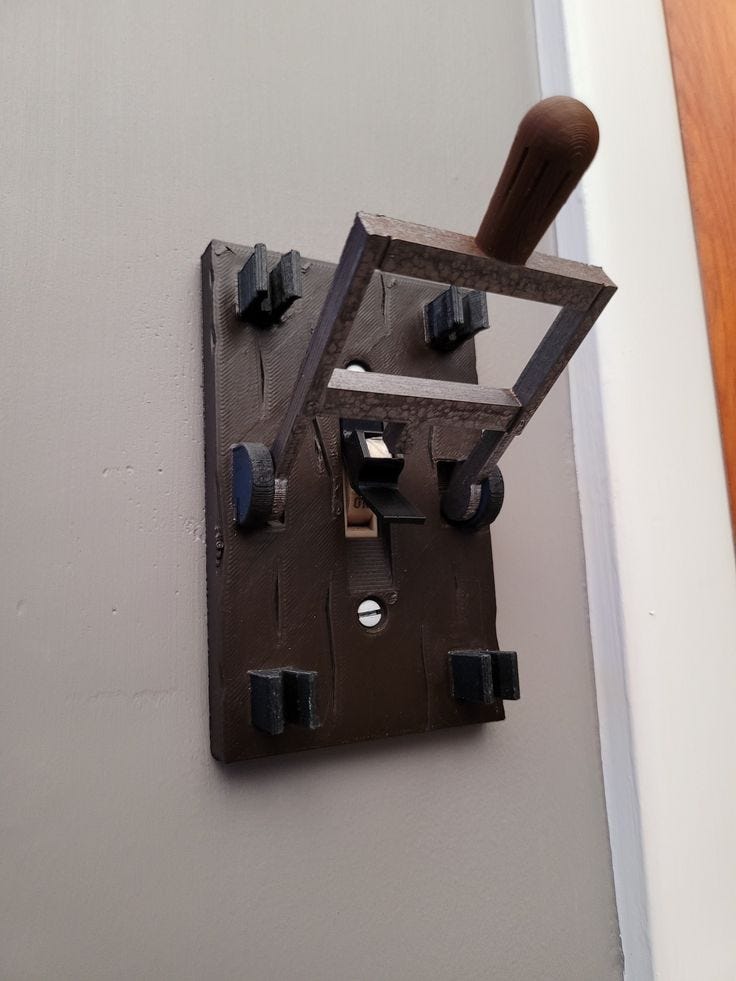
I moved on to another article, only to discover that “Trump destroyed the US economy, fired the people who’d fix it, and built the whole thing so it survives your ballot.” If you listen closely you can hear the heartbeat of fear nudging up from my gut, and my amygdala lighting up with one of those throw switches like in the movies. Chunk!
The article promises to project out past the 2028 election, tally the human cost at the level of the average working American, and posits that the US economy WILL collapse. It starts with European countries retrieving their gold from the basement of the New York Federal Reserve and ends with me taking a break to make a snack.
My take away is that the author REALLY wants to be able to say “I told you so!” two years from now. It’s the long game — write a long-form essay that connects all the dots, make just enough people (3.7K) think “OMG, he’s right!” so that the essay gets reposted a lot (1.7K) of times.
I was about to explore a set of posts titled The Collapse Chronicle, but changed my mind and made another snack.
The problem with describing how things fall apart is that there are usually a number of failure points that happen all at once, or that come to fruition as a kind of cascade of calamities.
Three Mile Island comes to mind. History buffs will enjoy reading the Kemeny Report which summarizes the post-debacle study of what caused the partial melt-down of a nuclear reactor. There were so many faults — technical and human. A pressure-relief valve that opened for a period of time failed to reset in the closed position. A gauge showed that the message to shut the valve had been sent, which operators took for evidence that the message had been received (it had not), and that the valve was closed (it was not). Another critical gauge was obscured by a maintenance tag. I am not making this up.
And this was just the lead-up to the critical error which caused the partial meltdown.
The Kemeny Report’s central finding was that the fundamental problems were people-related (training, procedures, management) and that the Nuclear Regulatory Commission had been preoccupied with equipment and technology over human factors.
It strikes me that all of these prognostications are preoccupied with the parts of the systems — financial, political, digital, commercial — happening in tandem or sequentially. Each pundit is guessing the order of events, describing what will fail.
What about us?
I am not finding much by way of guidance about how best we ought to comport ourselves when things stop working.
I know that apocalyptic “preppers” have lists of supplies needed and strategies to survive, but I am not talking about how we prepare for systemic failure. I’m interested in how we behave toward each other, how we think about how WE will be, before, during and after whatever calamity might be in store. How will we be with each other, when we might arguably need to rely on each other as never before?
For instance, last week I had a version of this starter list of virtues:
Love yourself. Love your neighbor. If your enemy is hungry, feed him. Repay injury with virtue. Drive out darkness with light.
These virtues were not written with any qualifiers. “Love your neighbor, unless it’s a neighbor that no one else loves, because there must be a reason.” “Drive out darkness with light, but when it’s really dark, remember that there just might not be enough light to make a difference.”
Empathy, caring, solicitousness, forgiveness, courage, and any other virtues you can think of. Do the rules of engagement change when the environment changes?
Virtues are not hothouse orchids.
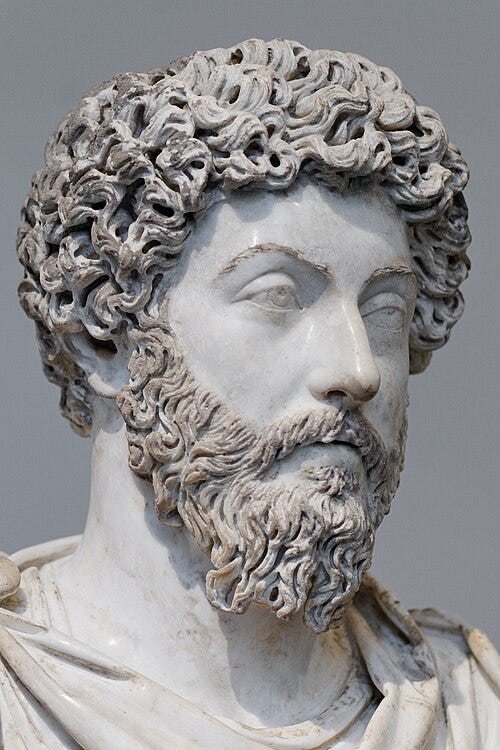
Marcus Aurelius is instructive here. If asked, ‘How are we to behave when the chaos of uncertainty overwhelms us, when scarcities of food, of fuel, of kindness, of justice press hard upon every person?” he might say that acting on the basis of virtues is not dependent on circumstances.
Here is a quote from his Meditations (7.24):
Everywhere and at all times it is in your power piously to acquiesce in your present condition, and to behave justly to those who are about you, and to exert your skill upon your present thoughts, that nothing shall steal into them without being well examined.
Accept your present condition with reverence. Be just with others. Stay truthful and examine your thinking.
Everywhere. And at all times. This is in your power.
Does Marcus Aurelius have a Substack?
P.S. This is essay number eighty, a good round number, so I am taking next week off. See you in a couple weeks. And thanks, as ever, for reading.
Too Long / Didn’t Read
We don't need Marcus A. We have Stewart H. Man, you are one of my favorite reads on Substack. You are kind, ethical, and lovely. And you have a great sense of humor. Aren't snacks terrific? I have to tell you, I haven't been keeping up with your column, because life has been so busy, this was a real treat for me. I've always thought that if everyone observed and actively practiced The Golden Rule, the world would be a healthy place. It's so basic. I wonder why it's so very difficult for people to be kind to one another. I think it's heartbreaking. I never lose hope, though. Big hug, Stewart. Enjoy your week off. xo
This is such a valuable and calming piece to read right now.