

Do you remember your first car? My informal survey of my wife and two friends suggests that everyone does.
My sister Pat (two years older than me, and in 12th grade in 1970) had a 1969 white Volkswagen Beetle, which I learned to drive. Trunk in the front, engine in the back. Stick shift. Roll-down windows. Nothing fancy.
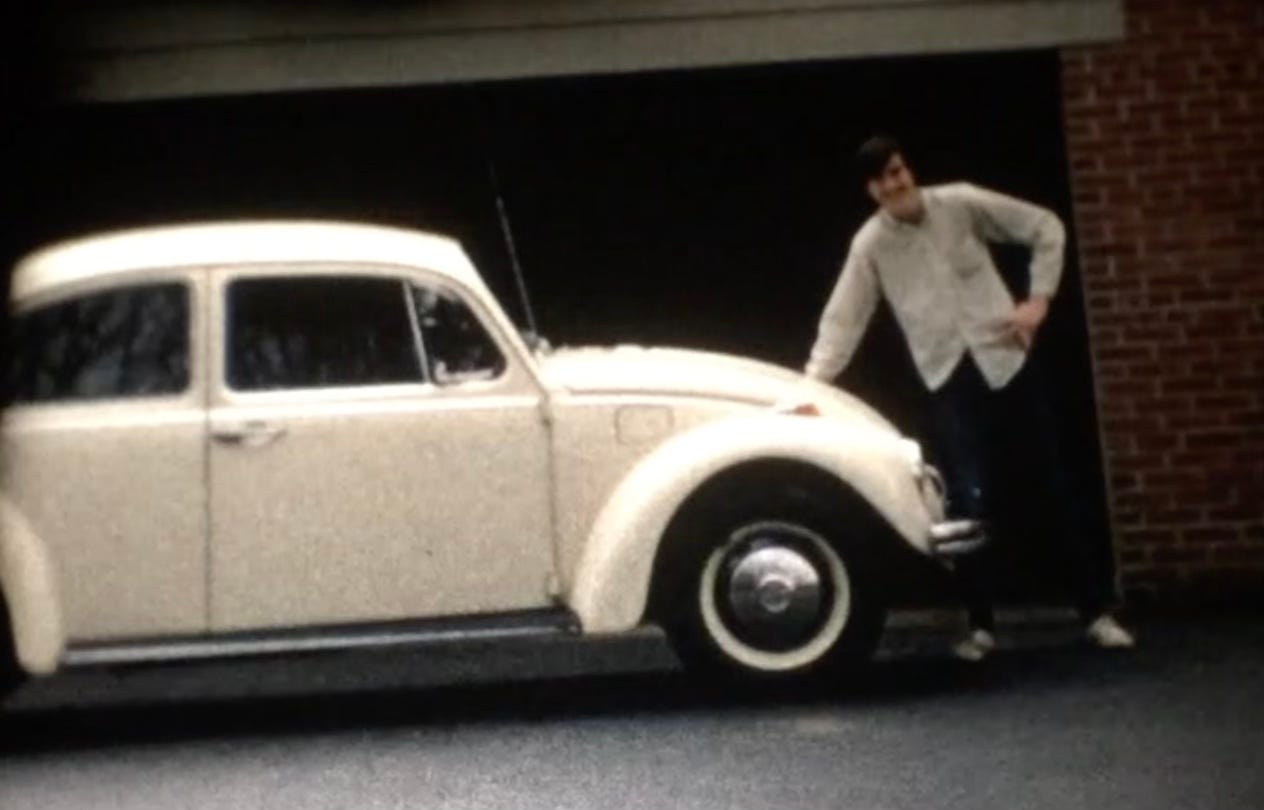
Do you remember the miles per gallon of your first car? Of course not. Nobody does (according to my research). That’s because in 1970 it cost about 4 bucks to fill your entire tank. Price per gallon in 1970 was about $0.35.
And this price had been remarkably stable from the end of World War II to 1973. During those decades gasoline prices rose so gradually, one hardly noticed. The shock of 1973 wasn’t just that prices went up — it was that, for the first time in a generation, they moved at all.
What happened? Even a little research on this topic made me feel like I had inhaled too much car exhaust. Proposing a simple explanation for political events in the Middle East is never a good idea. I’ll let Wikipedia summarize the First Oil Crisis:
In October 1973, the Organization of Arab Petroleum Exporting Countries (OAPEC) announced that it was implementing a total oil embargo against countries that had supported Israel at any point during the 1973 Yom Kippur War, which began after Egypt and Syria launched a large-scale surprise attack in an ultimately unsuccessful attempt to recover the territories that they had lost to Israel during the 1967 Six-Day War.
So, it all began in 1973, or maybe 1967. Or when the Ottoman Empire after WWI was partitioned by the western European powers and shaped the modern Middle East. Hard to say.
The interruption in the oil supply caused gasoline shortages. Some stations ran out, or rationed gas. There were long lines at the pump. When my 19 year old self in the VW was waiting in line at the Texaco station, I was only aware that “OPEC” was the cause of this faint (in retrospect) disruption in my life. Suddenly my $0.35 per gallon regular unleaded was costing me $0.54.
There was also a stock market crash from January 1973 until December 1974 that I knew nothing about. But I did know I was paying more than $6.50 to fill my tank.
What also went unnoticed was the close of an era — the end of (relatively) cheap and abundant gasoline. Underlying all those post-WWII decades was an invisible system of interdependence. After 1973 the system — now broken — became visible: the U.S. was dependent on foreign oil, the oil-producing nations were asserting their power, using oil supply as a weapon, and the whole postwar economic picture was now seen as fragile and uncertain.
I was only slightly more aware six years later with the Second Oil Crisis in 1979. This time oil production dropped in the aftermath of the Iranian Revolution. Another summary via Wikipedia:
Oil markets’ reaction raised the price of crude oil drastically over the next 12 months, more than doubling it to $39.50 per barrel [in 1980]. The sudden increase in price was connected with fuel shortages similar to the 1973 oil crisis. In 1980, following the onset of the Iran–Iraq War, oil production in Iran fell drastically. Iraq’s oil production also dropped significantly, triggering economic recessions worldwide.
Due to memories of the oil shortage in 1973, motorists soon began panic buying, and long lines appeared at gas stations, as they had six years earlier.
What I remember distinctly during this period was how the then Big Three automakers — Ford, Chrysler and GM — all downsized their automobiles, and small, fuel efficient Japanese cars flooded the market. My car at this time was a used, yellow 4-speed 1977 Datsun 1200 sedan. The previous owner had taken out the catalytic converter, so I was getting 43 miles per gallon on the highway — a situation to which I turned a moral blind eye, even when my environmentalist girlfriend at the time broke up with me over this issue.
At this point, it’s hard not to notice the recurring theme of the supply of oil used for political and economic power, and the persistent casting of the usual suspects in the oil drama: Iran, Iraq, Israel, Saudi Arabia, the U.S.
Jimmy Carter, in his 1980 state of union address1 had this to say:
An attempt by any outside force to gain control of the Persian Gulf region will be regarded as an assault on the vital interests of the United States.
The more things change, the more they are all about oil, am I right?
This was a few years before the term “globalization” was in popular currency. It’s all connected. We all depend on each other and on unencumbered trade with each other.
If something interrupts the oil distribution system — for instance, two tough guys take out a rival mob leader, whose gang controls a key waterway — the world adapts to bring things back to normal. Even now, America is leading the way toward stabilizing global markets. And the automobile industry is fully incentivized to make more electric vehicles (EVs), and make gas cars smaller and more efficient.
Totally kidding. They are not doing any of that.
Federal regulations to encourage electric vehicles have been rolled back. The tax credit for EV purchases ended. The best selling vehicle of any type in the U.S. is the Ford F-Series pickup, and has been for the past 44 years.2 The gas version’s average mile per gallon is 16 city - 21 highway. Their “EcoBoost” model gets 17 and 25.3
By comparison, the most efficient non-hybrid car is the 2025 Honda Civic, which has an average mpg of 33 city - 42 highway.
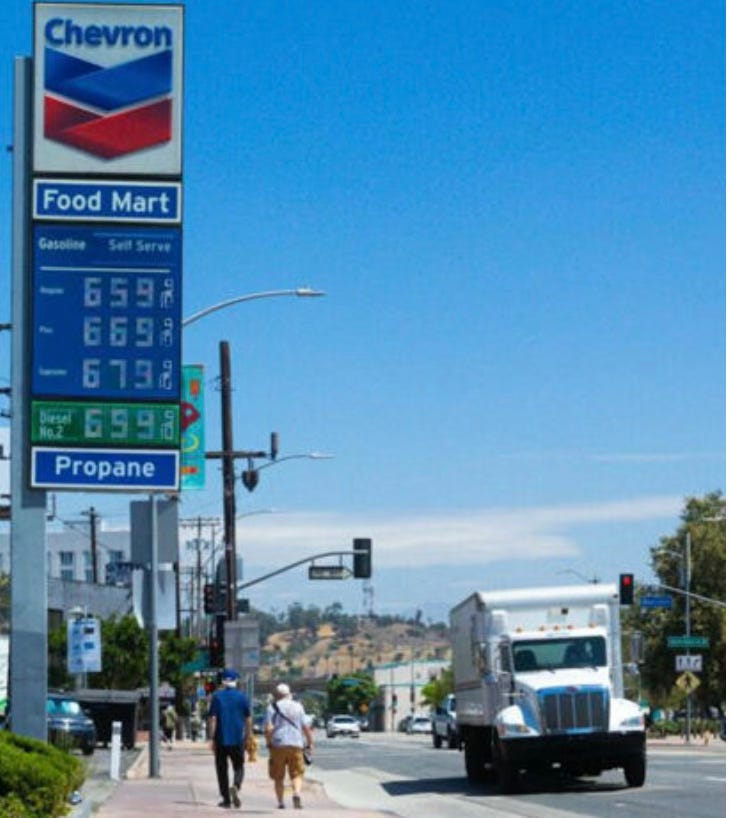
As of this writing, gas prices are over $5 per gallon in some places. So far no shortages or long lines or odd-even rationing. The economic turmoil generated by this arguably unnecessary war is far more punishing and catastrophic in other places in the world and on other livelihoods and other lives.
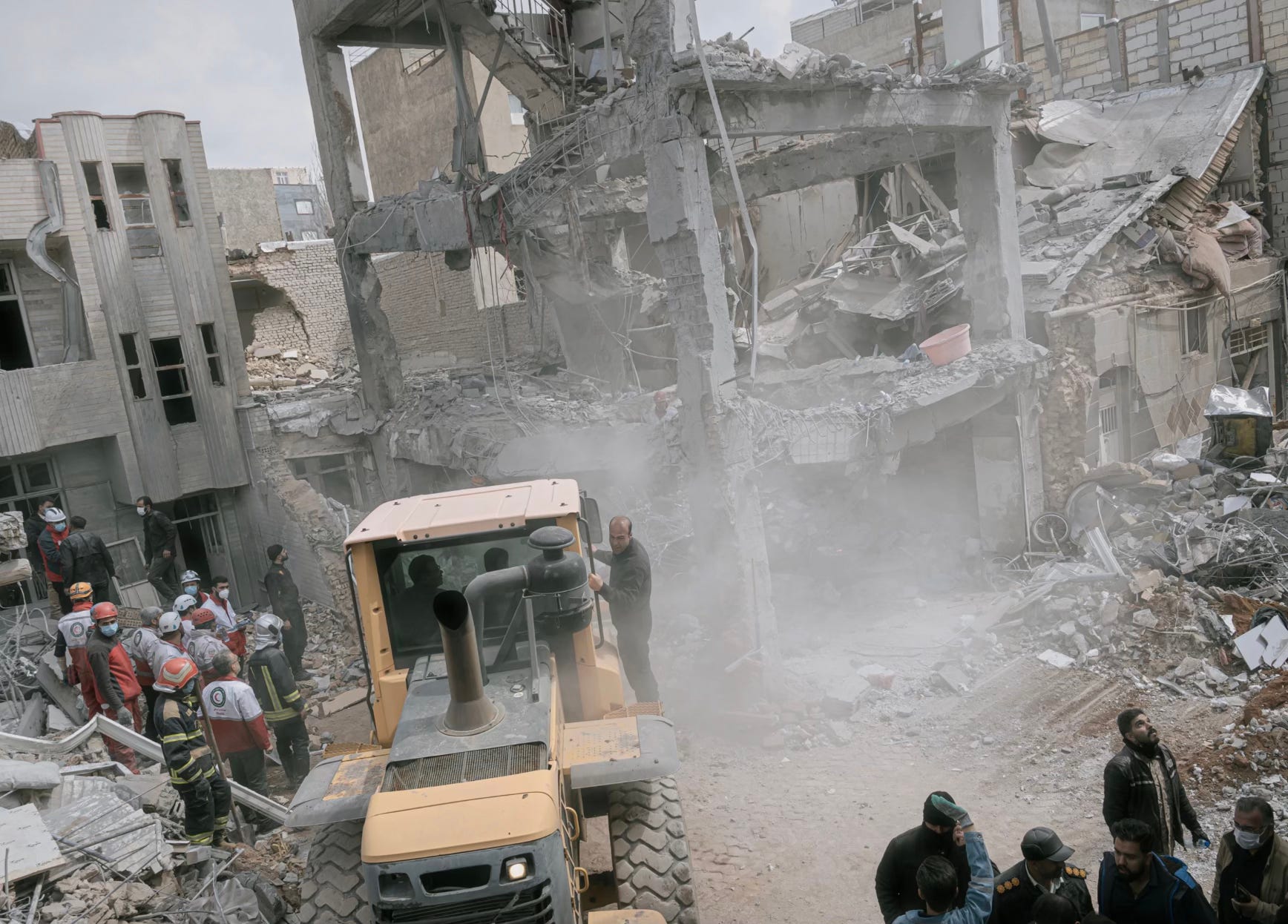
As for the tiny ham-fisted leaders of our Executive branch, they would like us to think their “excursion” is going to plan. But as we learned from the oil crises of the past, sometimes a system is invisible until it breaks.
Or someone breaks it.


Carter, Jimmy (January 23, 1980). “State of the Union Address”. Jimmy Carter Presidential Library. Archived from the original on August 7, 2008. Retrieved July 27, 2008.
One exception: In 2024 the Toyota RAV4 SUV briefly overtook the F-150 (for those of you at home keeping score)
https://www.wayscarffford.com/blog/ford-f150-mpg
I remember the car I was given to use, the one in which I learned to drive: A Ford Granada. I remember the first car I actually owned: A Honda Civic, which was MUCH smaller than today's Civics. I remember the inconvenience of those long gas lines, though I wasn't yet old enough to drive at that time.
Today is all about asserting control, and I might summarize it as ~~willy nilly~~ !!
You would love this book I read in grad school! Carbon Democracy: Political Power in the Age of Oil | Verso Books https://share.google/mzs6oTSMdMPhnUo3C
It's short and riveting. I don't agree with Mitchell's whole read on the situation in the 70s but it's certainly more complicated than I thought. Claude jogged my memory on Mitchell's explanation of the price spike:
"Rockefeller's heirs engineered scarcity from the start, then when they lost their grip on Middle Eastern fields, they engineered a price spike and let OPEC take the blame — which conveniently ushered in the era of "the market" as the governing logic of democratic politics. Pretty neat trick."
Also, 38 cents in 1976 is equivalent to around $2.18 in 2025 USD - in case anyone else was wondering!